
Thoughts
Why Big Things Break My Brain (And I'm Fine With That)
From King Kong to Pacific Rim to Attack on Titan: why I'll always choose a skyscraper-sized monster over a prestige drama, and the 1757 idea that explains it.
May 12, 2026 · 6 min read
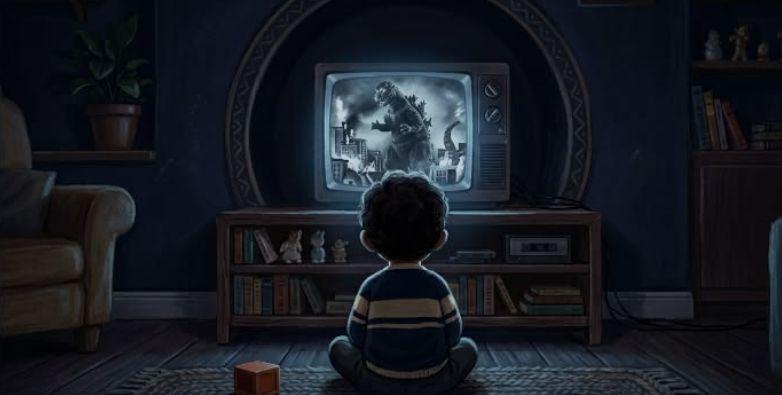
If there's a creature on screen big enough to casually step on a skyscraper, I'm in the front row. No trailer, no Rotten Tomatoes score, no film bro telling me the CGI looks unpolished in the third act.
I just don't care, and this essay is my attempt to explain why, and why I have zero plans to change.
This isn't a review of any one movie. It's a defense of a way of experiencing art that gets treated like a guilty pleasure, something you're supposed to outgrow once your taste becomes "sophisticated."
Where did the obsession start?
This fixation has been the foundation of my personality since childhood. The second my brain saw something massive, impossible, and world-ending on a screen, it decided: Yes. More of this, please.
It all started with Peter Jackson's 2005 King Kong remake. The film cost $207 million, ran for over three hours, and was the most expensive movie ever made at the time. Universal executives signed off on every budget overrun because they knew what they had.
I remember sitting in front of the television completely amazed, eyes glued to the screen. Seeing a creature of that size, with that much presence, weight and emotional gravity, rewired my brain. Kong was built different. The scale and the raw emotion hit me at the same millisecond, and I have never fully recovered. From then on, the only qualification a film needed to win my loyalty was a simple question: Does something completely enormous exist in this universe?
Why do I defend the MonsterVerse?
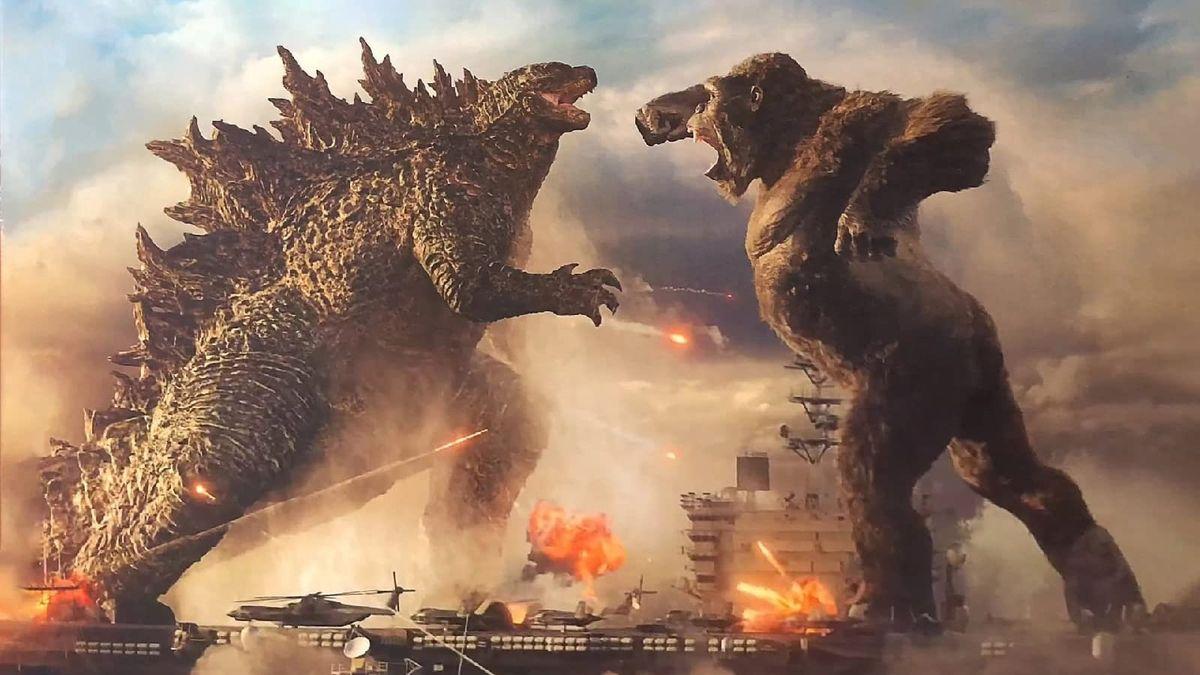
I'll be the first to admit that Legendary's MonsterVerse films aren't exactly targeting Academy Awards. The human characters are mostly placeholders who point frantically at the sky and deliver breathless exposition like "We have to stop it!" or "Nothing could have prepared us for this!" while the audience collectively thinks: Please shut up and put the camera back on the radioactive lizard.
Is the screenwriting occasionally held together by hope and vibes? Yes, absolutely.
Do I care? Not even a little bit.
Here's the thing about MonsterVerse criticism that never lands for me: when critics say "the human characters are weak," they're describing a feature as if it's a bug. The humans are weak because they're not the point. They're the plain wooden frame around a magnificent painting. You don't stand in a museum complaining about the border.
When Godzilla rises out of the ocean, the theater bass drops, and something that size moves with terrifying, impossible speed, that is the entire point of the movie. The plot is just the loading screen. The monster is why I watch. I've never felt cheated by these films, because I know exactly what I'm paying for.
Is Pacific Rim a masterpiece full of characters I can't name?
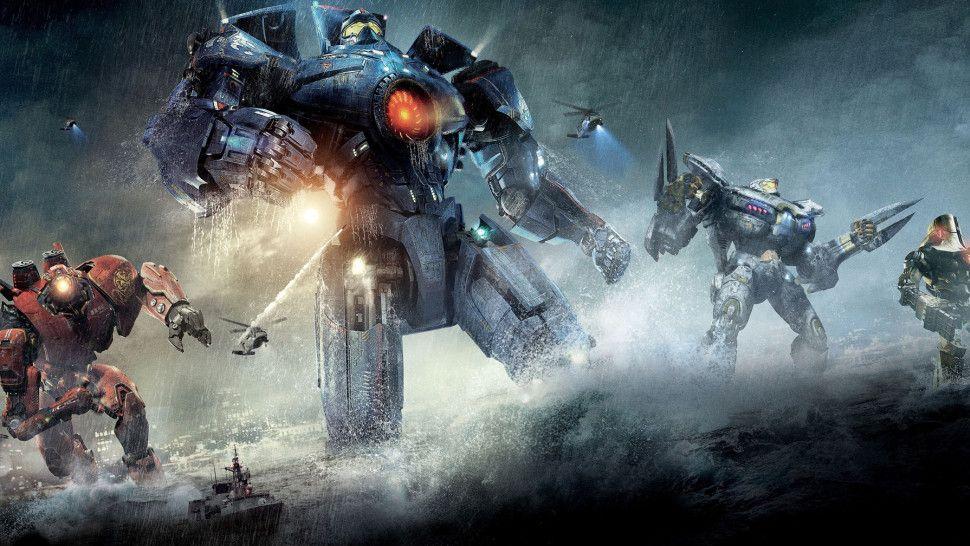
If you held a gun to my head, I couldn't tell you the name of a single human character in Guillermo del Toro's Pacific Rim (2013). There was a generic main guy with emotional baggage, and a stoic mentor who gave an inspirational speech. There was definitely a tragic backstory I was supposed to be weeping over.
What I can tell you, in high-definition detail, is what it felt like to watch a Jaeger step out of the dark ocean for the first time. The Jaegers don't move like slick, weightless Transformers. They move slowly and deliberately, with millions of tons of grinding hydraulic weight behind every stride. A machine the size of an apartment block, wading through water that barely reaches its knees, built for the singular, glorious purpose of walking up to an alien monster and punching it in the jaw. The human characters could have been cardboard cutouts reading "Human One" and "Human Two" and I'd still have given the movie a perfect score on the mech footage alone. Zero regrets. Zero apologies.
What about Jurassic Park?
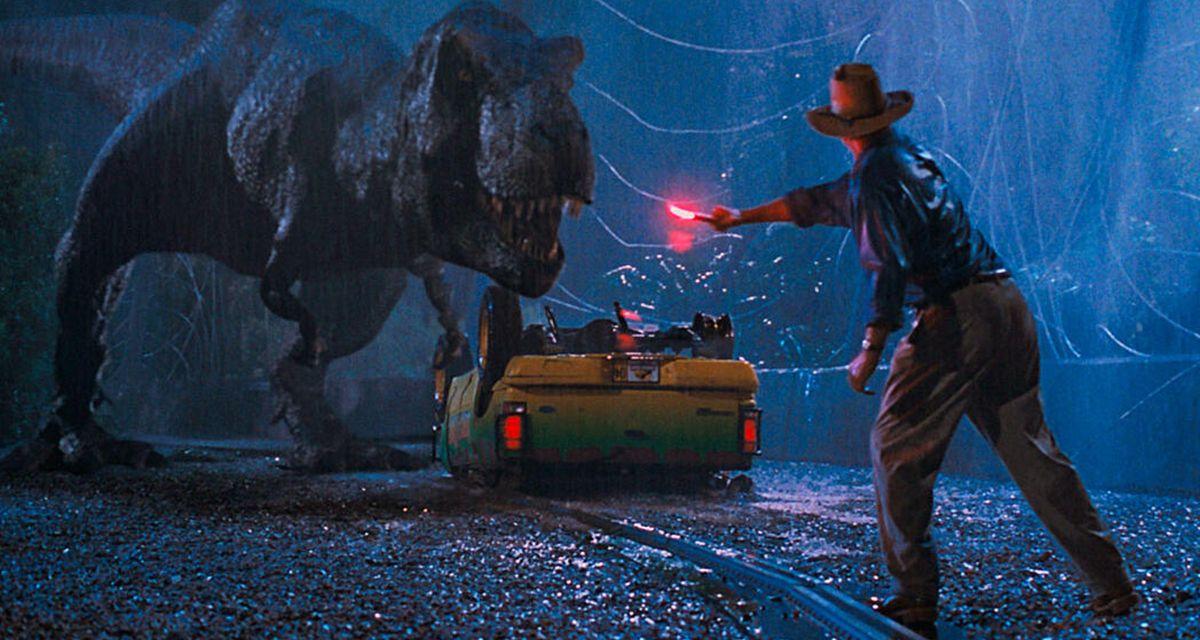
The original 1993 Jurassic Park is a masterpiece. Steven Spielberg captured lightning in a bottle, and thirty years of technology haven't fully replicated it. The sequence where the T-Rex steps out into the pouring rain, the water trembling in the plastic cup, and lets out that echoing roar is one of cinema's great hold-your-breath moments.
The sequels, on the other hand, are a wild ride. The Jurassic World trilogy kept inventing more absurd, corporate excuses to send people back to an island that has murdered everyone who ever set foot on it. The screenwriting deteriorated, and by 2022's Dominion the franchise had run out of steam, leaning on legacy nostalgia and a prehistoric locust subplot nobody asked for. (I gave it a 4.7 in my bottom 10 movies of 2026 so far.)
And yet, I watched every single one. A CGI dinosaur walking through a frame is an automatic victory for me. A Tyrannosaurus Rex on screen triggers an instinctive response in my chest that bypasses the part of my brain that cares about character arcs or three-act structure. You could hand me two hours of the worst dialogue ever written, but if an apex predator of that scale exists in the frame, I'll walk out satisfied.
Where does scale become art? Attack on Titan
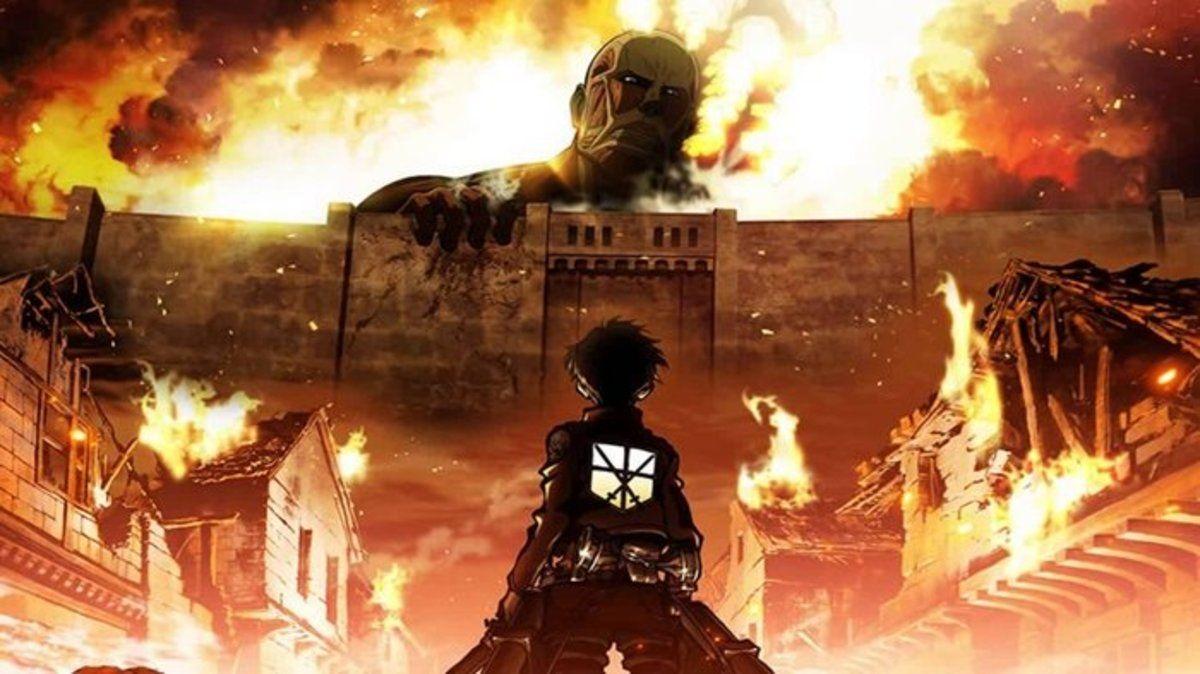
This is where I have to pause my "dumb blockbuster" defense and admit something deeper is happening. Attack on Titan figured out a narrative secret Hollywood spends hundreds of millions trying to manufacture: scale, used correctly, isn't just visually cool. It's psychologically destabilizing in the best way.
You know the scene from the very first episode. The Colossal Titan slowly peers over Wall Maria. The wall is fifty meters tall, a monumental structure that represents the boundary of human survival, a fortress humanity spent a century building just to feel safe. And the Colossal Titan is simply taller. It looks over the edge of that stronghold the way a normal person would look over a neighborhood garden fence.
In that single frame, my brain went quiet. I was filled with pure awe, the exact feeling I've been chasing since I was a kid sitting frozen in front of a television.
Is there a name for this feeling?
This reaction has a formal name, and it's far older than motion pictures. In 1757, the philosopher Edmund Burke published a treatise on why certain extreme experiences produce a feeling that isn't quite fear or pleasure, but sits right between the two.
He called it the Sublime.
Burke's argument was that the Sublime happens when our senses meet something so vast, powerful or dangerous that it overwhelms our ability to process it. Faced with that magnitude, your brain hits its limit and goes silent in reverence. Burke was thinking about mountain peaks and ocean storms seen from a cliff. I just happen to get the same existential hush watching a fictional radioactive lizard level a city.
Humanity invented fiction to trigger this response on demand, built IMAX theaters to deliver it at maximum volume, and I will always show up for it.
Want to see what happens when the giant robots don't work for me? Read my Transformers breakdown.