
Thoughts
Anime vs Cartoon: What's Actually the Difference?
The internet loves to fight over whether anime is a geographic location or just a style. Turns out, everyone is using a different dictionary.
June 15, 2026 · 6 min read
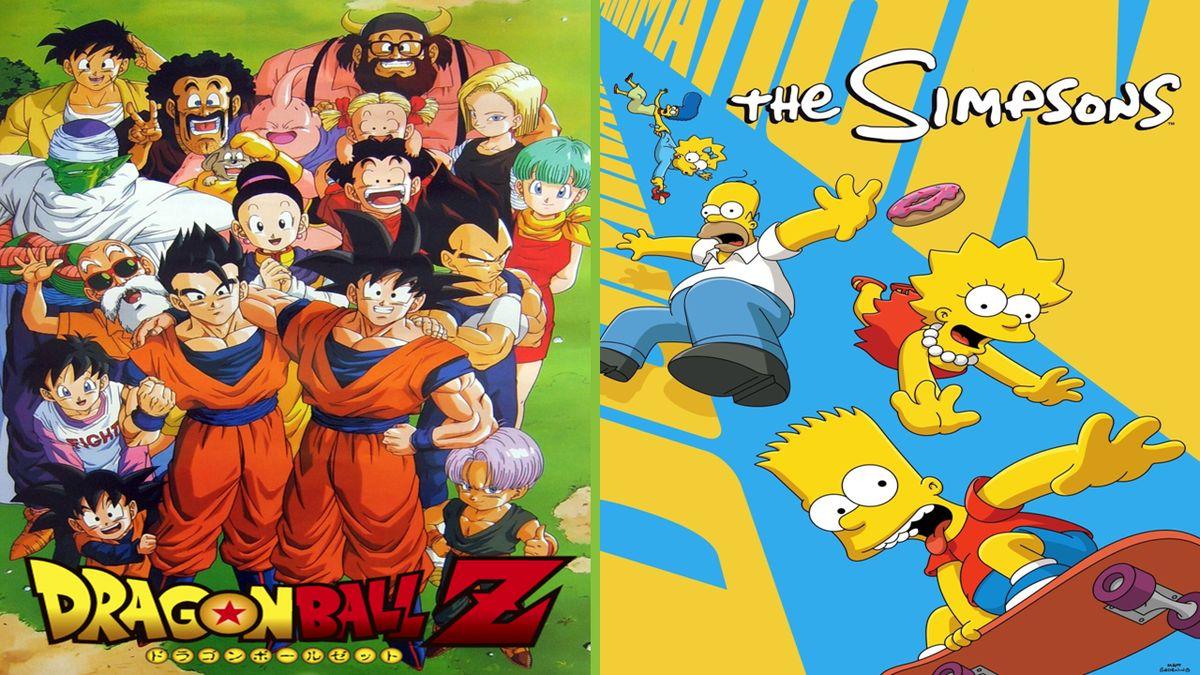
The internet's endless discourse surrounding the "Anime vs. Cartoon" debate has been living entirely rent-free in my head lately.
Is anime strictly defined by its Japanese origin, or is it simply a broad stylistic label? Here is what originally set me off: the exact millisecond you casually refer to a Japanese animated series as a "cartoon" in front of a certain sub-section of the fandom, you would think you just deeply insulted their entire ancestral bloodline.
Yet, on a purely etymological level, the word anime literally derives from the English word animation. So, who is actually in the right here? Let’s break this down completely, because the linguistic reality is far messier than either side of this online war wants to admit.
What "Anime" Actually Means in Japan
Let’s start with the dry but essential foundation: the actual vocabulary. The word "anime" is simply a three-syllable, shortened version of the English loanword "animation," transliterated into Japanese phonetics. Inside Japan, that is exactly how the word functions — it is a generic, catch-all umbrella term for any animated project, completely regardless of its geographic origin or aesthetic style.
To a viewer in Tokyo, SpongeBob SquarePants is anime. The Simpsons is anime. There is even a verified, physical Japanese DVD release from the archives that openly describes Betty Boop —the black-and-white 1930s American character— as an "antique anime".
So, on a purely technical level, if you are utilizing the word exactly how the country that minted it does, Peppa Pig and Phineas and Ferb are anime. If it is animated, it qualifies. That side of the argument isn't a linguistic stretch; it is basic translation accuracy.
This happens constantly when words migrate across languages. A general term gets exported, travels across borders, picks up a far narrower, more hyper-specific job in its new linguistic home, while the original broad definition remains perfectly intact back in its country of origin. The word "anime" is simply doing what hundreds of loanwords have done before it — it just happens to be the one currently causing massive arguments in the group chat.
Why English Speakers Draw a Hard Line
The second the word crossed over into the English lexicon, it did something words do all the time: it dramatically narrowed. English dictionaries define anime explicitly as "a style of Japanese animation," completely decoupling it from global animation as a whole. While the word was born as a generic term, its new Western employment was strictly tied to two criteria: animation either physically manufactured in Japan, or crafted in that distinct Japanese visual house style.
There is even a fascinating historical theory that French media distribution had a direct hand in this division. When Japanese animation exploded in popularity across France in the late 1970s and 1980s, the French phrase dessin animé (literally meaning "animated drawing") likely helped cement "anime" as a foreign, exotic shorthand once it filtered into broader European and American fandom circles.
Ultimately, the entire debate boils down to an identity crisis: when someone pedantically insists Peppa Pig is anime, they are technically relying on the native Japanese definition. When an anime purist aggressively shuts them down, they are operating under the Western English definition. Both sides are technically correct; they are just speaking two entirely different versions of the exact same word.
Stigma and Gatekeeping: Why Do Fans Get Defensive?
To understand why this argument gets so incredibly heated, you have to look past the dictionary and examine what the word "cartoon" has historically come to represent in Western pop culture. For decades, "cartoon" quietly translated to "juvenile entertainment lacking mature narrative stakes".
Older anime fans who spent their formative years getting mocked for watching complex, heavily serialized subtitled shows featuring philosophical themes, graphic violence, and actual character deaths are understandably protective. They are not exactly thrilled to watch their favorite art form get lazily lumped back into a casual label that carries heavy "this is strictly for toddlers" systemic baggage.
There is also the technical visual argument. Historically, classic anime leaned heavily on a method called limited animation — deploying fewer unique drawings per second than the fluid, high-budget house styles pioneered by Walt Disney or old-school Toei productions. Pioneer studios like Osamu Tezuka's Mushi Production adopted these visual limitations entirely out of financial necessity; they simply didn't possess corporate American capital.
Fewer frames, prolonged static shots held over dramatic close-ups, and dialogue-heavy sequences instead of constant, hyper-fluid movement became a brilliant stylistic signature rather than a technical flaw. It is part of what people point to when they argue that anime physically feels distinct from Western animation.
The gatekeeping isn't actually about pure linguistics; it is a defense mechanism built out of years of defensive fandom isolation. The word "cartoon" isn't the problem; the narrow, Western assumption of what an animated story is allowed to be is the actual enemy. When a viewer's entire mental framework of a cartoon is built on Saturday morning slapstick, and you hand them a psychological war epic where a teenager watches their entire village get wiped out in the pilot episode, you can see why fans get twitchy about the label.
The Blurry Middle Ground
Then, there are the cartoons that completely shatter both sides of the argument:
- Avatar: The Last Airbender & The Legend of Korra: Created by an American studio, helmed by American writers, and performed by an English-speaking voice cast — yet entirely soaked in classic anime narrative architecture, pacing, and fight choreography. Fandoms have spent two decades aggressively debating whether to classify it as "anime-influenced" or just pure anime.
- The Boondocks: A masterclass in American satirical animation that utilizes a highly stylized, flawless anime aesthetic to deliver sharp cultural commentary.
- Torkaizer (2013): A fascinating project out of a studio based in Abu Dhabi, explicitly marketed as "the Middle East's first anime series". It followed a young Emirati hero fighting off an alien invasion, animated in a gorgeous, Japanese-inspired visual pedigree. It triggered the exact same boundary war: if it wasn't physically produced in Japan, can it legitimately claim the title, or is it simply "anime-flavored"?
A lot of purists treat this exactly like the culinary world treats Neapolitan pizza. Pizza may have originated in Italy, and you can easily bake a world-class, identical pie anywhere on the globe, but traditionalists will firmly tell you it isn't real pizza unless it adheres to strict regional geographic processes. For a massive chunk of the fandom, country of origin is a non-negotiable part of the definition.
My Honest Take
Here is my view: you are completely justified in clowning the discourse, because it is objectively hilarious that a word that literally translates to "animation" gets treated like sacred, protected vocabulary the second it leaves its home borders.
But I also completely understand why the distinction carries emotional weight. Language naturally evolves when it travels. "Anime" left Japan as a generic descriptor and returned in English as a hyper-specific category, the exact same way the word "sushi" simply refers to "vinegared rice" in Japanese, but means something completely specific at a Western restaurant.
So no, calling an anime a "cartoon" isn't wrong — it’s just poking at a linguistic scar that fans spent years trying to heal due to cultural stigma.
The definitive answer nobody wants to accept? It is all just animation.
Some of it simply happens to arrive with subtitles, a distinct visual pedigree, and a dedicated fanbase that is completely ready to throw hands over what you label it.