
Thoughts
Is Squid Game Still Worth Watching? Yes, Even After S1
Is Squid Game worth watching after Season 1? Yes. Why the later seasons feel weaker, and how Netflix's split release is more to blame than the writing.
May 11, 2026 · 6 min read
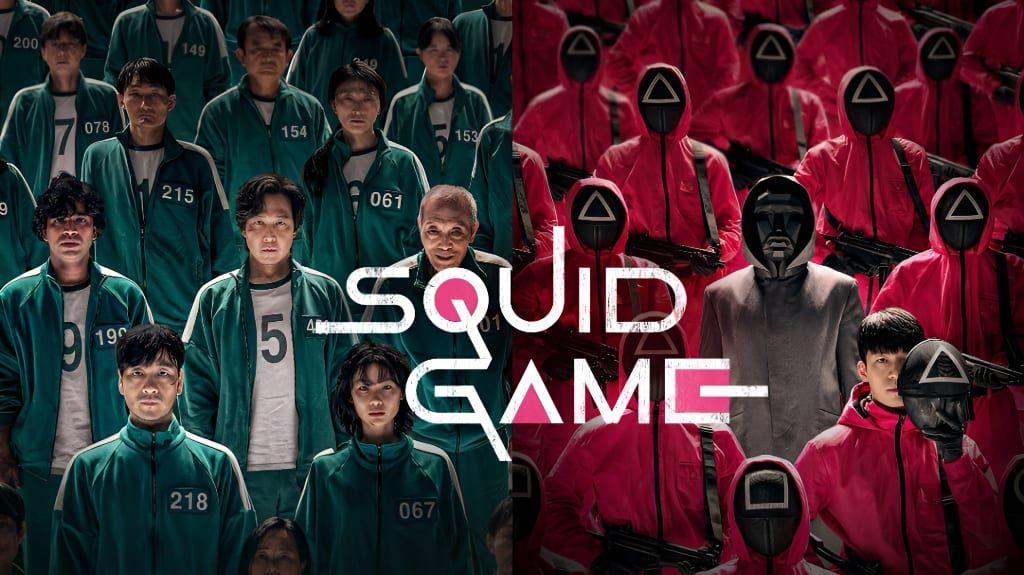
Hwang Dong-hyuk first wrote the idea in 2008, pulling from his own financial struggles and the class inequality baked into South Korean society. He took the script around to studios for years and nobody wanted it, so he shelved it. Then Netflix came looking for international content in 2019 and picked it up. Season 1 dropped September 17, 2021 and hit number one in 94 countries, pulling 265 million views in its first 91 days. By the time Season 2 launched in December 2024, Season 1 had 330 million viewers and 2.8 billion hours watched. The stress of making it cost Hwang six teeth. Six actual teeth.
Squid Game is a great show that made some bad strategic decisions. Season 1 is lightning in a bottle, and a lot of my frustration with Seasons 2 and 3 has less to do with the writing than with how Netflix released them.
Both easy takes exist online: it's a masterpiece, or it's Netflix squeezing a finished story for money. Neither is quite right.
This post contains minor spoilers for Netflix's Squid Game.
What makes Season 1 untouchable
The games are Red Light Green Light, honeycomb carving, tug-of-war, marbles, glass stepping stones, and the title game. These are things Korean kids played in the street, drenched in nostalgia, and the show weaponizes that by dropping adults at their economic rock bottom into a structure designed for childhood play, then watching them tear each other apart for a prize worth 45.6 billion won that most won't live to collect.
It works because the desperation is real before anyone steps into an arena. Seong Gi-hun has gambled away everything. He borrows from loan sharks, misses his daughter's birthday, and can't stop even when he knows he should. He's technically not a good person, and the show fills the other 455 spots with people who each have their own version of that story: a North Korean defector trying to get her family out, a man with terminal cancer who figures this is the only gamble left worth taking, a Pakistani migrant worker owed wages he'll never see through normal channels. It's a cross-section of everyone the economy has already failed, and the show slows down enough to make you care about specific people before it starts killing them.
The visual design does a lot too. The dormitory looks like an enormous pastel-colored playground, the guards wear identical pink coveralls and animal masks, and the administrators are all sharp angles and black suits. The contrast between the childishness of the arenas and the adult stakes is what makes it so compelling.
Where does it start to slip?
Hwang always conceived this as a standalone story. But Netflix had a show that generated an estimated 900 million dollars in value for the platform, and it came back with an offer to continue it. He's been open that his compensation from Season 1 didn't match what the show was worth, so coming back was partly about correcting that. Can't blame him.
In Season 2, Gi-hun is back in South Korea, determined to find the recruiter and get back into the games to take them down from the inside. He tries to organize a rebellion among the players and it fails badly. There were things going for it, like some interesting new players and the dynamic between Gi-hun and the Front Man.
The VIPs, the obscenely wealthy spectators who fund the whole operation, remain a persistent weakness across all three seasons. Rich people treating human suffering as a spectator sport is exactly the critique the show should be making, but the characters are so thinly written and unconvincingly performed that they undercut it.
The Front Man, played by Lee Byung-hun, is where Season 3 wastes its best card. He's one of the show's most layered characters: a man who played the games, won, and chose to serve the machine instead of burning it down. He's the dark mirror to Gi-hun, and their confrontation is supposed to be the payoff for everything after Season 1. Season 3 barely uses him. He disappears for most of it and comes back for a finale that doesn't give that confrontation anywhere near the weight it needed.
What holds up
The show never got lazy about what it looks like. Season 1 cost around 21 million dollars, Season 2 jumped to 84 million, and Season 3 had 69 million for just six episodes. The game environments stay inventive and the color work stays sharp.
Lee Jung-jae holds every season together. He won the Emmy for Outstanding Lead Actor in a Drama Series for Season 1, the first Korean actor to win in that category. Gi-hun is stubborn and grief-soaked and never becomes heroic cleanly, and Lee never lets him get reduced to a symbol, even when the writing gets soft around him.
The class argument never disappears either. Every season returns to the same idea: the game isn't the problem. The game is just a more honest version of the world these people already live in. The arena kills you fast, but the world outside kills you slow. Debt and desperation aren't uniquely Korean experiences, and that's why the show resonated globally.
The release strategy is the real problem
A lot of what people read as creative failure in the later seasons is structural failure caused by how Netflix released them. Season 1 dropped all nine episodes at once and the world binged it together, which is part of why it felt like a moment. Season 2 dropped seven episodes on December 26, 2024, ended on a cliffhanger, and made viewers wait six months. Season 3 arrived June 27, 2025 and picked up exactly where Season 2 stopped, which confirmed what a lot of viewers suspected: Seasons 2 and 3 are functionally one 13-episode season that Netflix split into two release events.
It's a subscriber retention strategy, and it worked commercially. Season 2 hit 68 million views in four days, breaking the premiere record held by Wednesday. Season 3 hit 106 million views in ten days, the fastest any Netflix series in any language has reached that number. But the storytelling takes a real hit. When you split one story in half with a six-month gap, viewers forget who characters are, and subplots that were building slowly feel cold when Season 3 picks them up. It makes the writing look weaker than it is.
So should you watch it?
Yes. Start from Season 1 and watch through Episode 6, the marbles episode, one of the best single episodes of television in recent memory. If the show hasn't grabbed you by then, it probably won't. If it has, you're finishing it.
The release strategy was cynical and the VIPs never worked, but Season 1 alone is some of the best TV of the decade. Seasons 2 and 3 watched back to back, without the enforced wait, are a better experience than most people who watched them as they aired will give them credit for.
Want more where this came from? Here's my K-drama recommendations.