
Thoughts
The Boys Finale Review: Fine Ending, Weak Final Season
The finale was fine. The final season wasn't: rushed pacing, a thinner budget, and Homelander's powers switching on and off to suit the plot.
May 22, 2026 · 4 min read
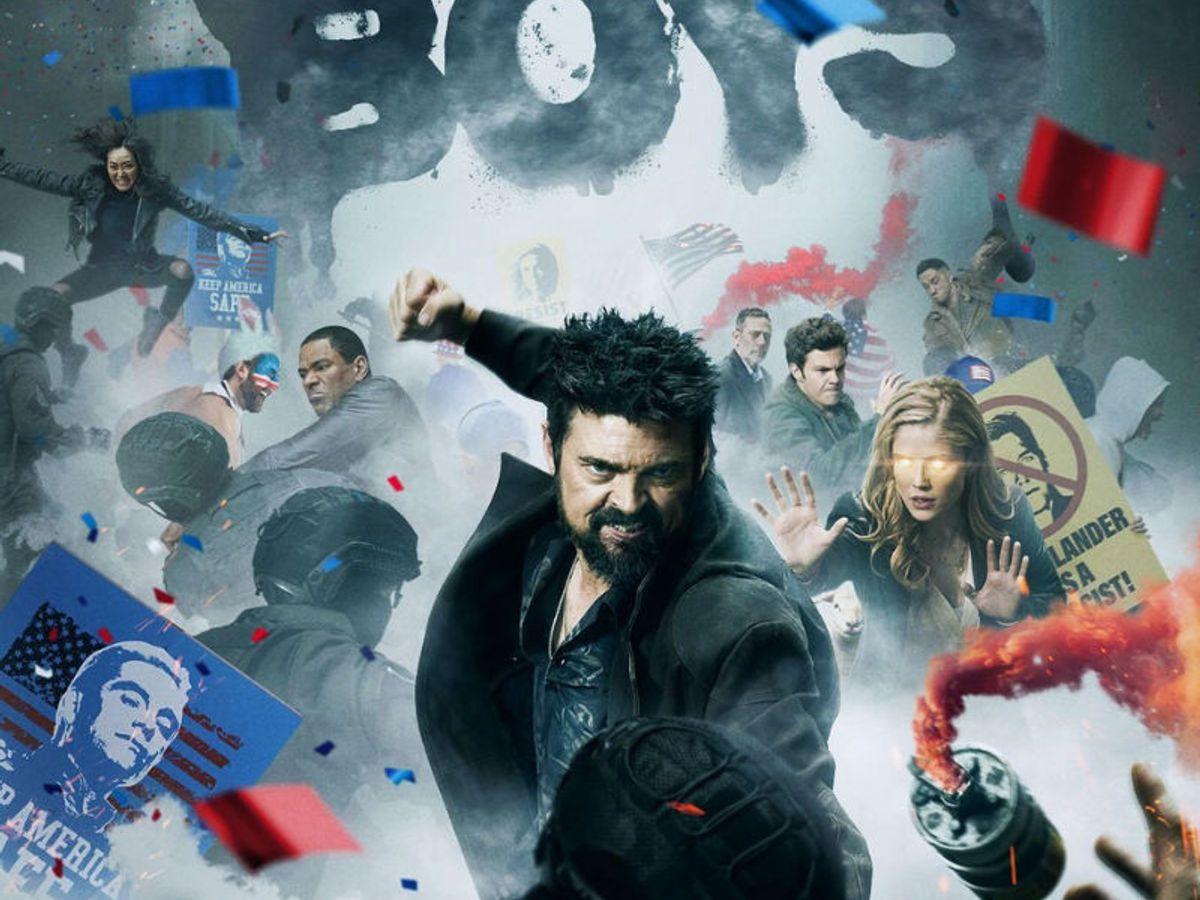
The Boys is over, and I'm not even mad at the finale. That's the strange part. I watched the last episode, nodded, and thought, okay, fair enough.
What I can't let go of is the season before it. I followed this show for seven years, and I wanted a better goodbye than a season that felt rushed and more interested in what comes next than in finishing what it started.
This post contains spoilers for the final season of The Boys.
What was the show at its peak?
Created by Eric Kripke (Supernatural) and based on the comic by Garth Ennis and Darick Robertson, The Boys debuted in 2019 with a sharp, cynical premise: what if the world's biggest superheroes were corrupt, narcissistic brand assets run by a multi-billion-dollar conglomerate, and the only people trying to stop them were powerless civilians with nothing left to lose?
Seasons 1 and 2 had it down. The whole thesis lands in the pilot's opening minutes, when A-Train accidentally vaporizes Hughie's girlfriend, Robin, and keeps running. To a Supe, human life is an obstacle. Vought International was the real villain, a PR machine that wrapped atrocities in branding. Homelander was terrifying because he was trapped inside it, balancing his psychotic impulses against his need for public adoration.
Who is this show even about?
Somewhere around Season 3, the writers forgot that Hughie and Annie were the emotional anchor and Vought was the antagonist. The show turned into the Butcher and Homelander show, and everyone else got left behind.
Annie (Starlight) had it worst. She was supposed to be the heart of the show, and by the final season her arc was stagnant, with most of her scenes spent standing in the background looking concerned. Frenchie's storylines had been running on fumes for years, so the writers made up side-quests for him instead of giving his arc a real conclusion.
Then there's Victoria Neuman. After seasons of setting her up as a smart, terrifying political threat, she gets torn apart by Butcher's new tentacle powers. It should have been a cathartic payoff, but it felt rushed, like board-clearing to set up spin-offs. The CGI tentacles also looked cheap, and the power set broke the grounded line the show had drawn between humans and Supes.
What happened to the budget and the pacing?
Go back to Season 3's "Herogasm" episode, where Soldier Boy, Butcher, and Hughie team up to fight Homelander. The choreography, the physical stakes, and the effects showed what a prestige budget looks like. The final season never reached that bar. The finale delivered the blood and gore, but the staging felt constrained, and the scale didn't match the weight of the moment.
The pacing collapsed too. Betrayals, revelations, and major deaths were crammed into the last episodes with no room to breathe. Butcher killing Homelander with a crowbar to the skull was the poetic, unglamorous ending the story needed, but the rushed sequencing around it took away from the impact.
Why do Homelander's powers keep switching off?
The power scaling fell apart by the end. In the early seasons, Homelander's hearing was terrifying. He could pick up a single heartbeat across a building, hear A-Train whispering, or track Frenchie tapping a finger in another room. He was a walking panopticon.
In the final season, whenever the plot needed the heroes to plan a coup under his nose, those abilities quietly switched off. That is lazy writing. If you build an omniscient villain, you have to write clever ways around him, not pretend his powers don't exist when the scene gets complicated.
The Gen V crossover has the same problem. We spent a whole spin-off season building Marie Moreau up as someone who could shift the balance of power between humans and Supes. In Season 5 she shows up, hands over a notebook, escorts a few refugees to Canada, and leaves. When a spin-off can be skipped without losing any context, it looks like the franchise cares more about synergy than storytelling.
What actually worked?
A-Train's redemption. He had the best arc of the final season. A man who started the series as a remorseless killer claws his way back toward his humanity, and his last act, helping The Boys escape the Freedom Camps at the cost of his life at Homelander's hands, was a heartbreaking end. He died a hero.
Firecracker's collapse. Her descent was one of the most unsettling, well-acted arcs of the season. She starts as a toxic, true-believing grifter using her trauma for clout, then realizes too late that the fascist god she worships sees her as a disposable prop.
Final thoughts
The finale itself works. Butcher ending Homelander with a quiet "this is for Becca" felt right, and the soft epilogue reminded us that the show did its best work when the violence stopped and the characters got to be human: Hughie and Annie expecting a child named Robin, Mother's Milk becoming Ryan's legal guardian (for some reason), and Kimiko moving to Marseille to honor Frenchie.
But as a final season, it didn't measure up to the show's golden era. The Boys ran out of road for some characters two seasons too late, and out of ideas for others two seasons too early, and it put setting up a streaming universe ahead of ending the story it spent seven years telling.